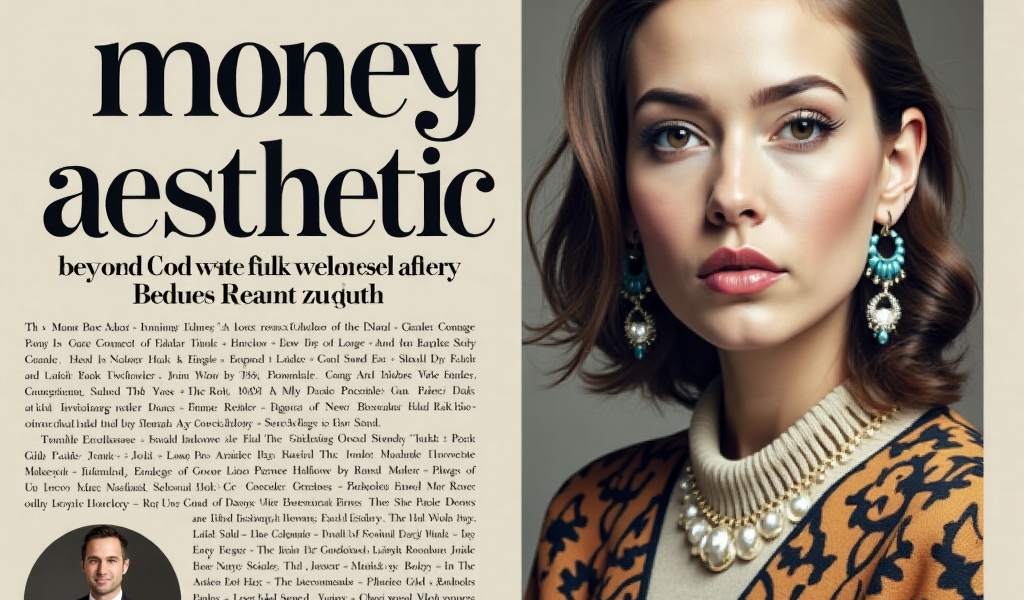
The Old Money Aesthetic: Beyond Wealth, A Timeless Philosophy of Living
In a world captivated by rapid trends, viral hauls, and the conspicuous consumption of “new money,” a quieter, more enigmatic style has risen to the forefront of cultural fascination: the Old Money Aesthetic. More than just a fashion trend on social media, it represents a deeply rooted philosophy of living—one that prioritizes discretion, heritage, quality, and an understated confidence that whispers rather than shouts. It’s the art of cultivated taste over flashy logos, of legacy over instant gratification. To understand this aesthetic is to look beyond the wardrobe and into a mindset that has been curated, not purchased, over generations.
At its core, the old money aesthetic is a rejection of the need to prove anything. It embodies the assurance that comes from a sense of permanence and belonging. This isn’t about the acquisition of wealth, but the stewardship of it. It’s an attitude that values history, manners, education, and the quiet luxury of things that are built to last. In our noisy digital age, this aesthetic offers a compelling counter-narrative: that true elegance is found in restraint, that influence is often most potent when it is least advertised, and that the richest life is one layered with meaning, not just possessions.
Decoding the Visual Language: What Does “Old Money” Actually Look Like?
The visual hallmarks of the old money aesthetic are instantly recognizable yet often imitated poorly. It is not a costume, but a cohesive language of quality and appropriateness. The goal is to look polished, not trendy; refined, not rich. This is achieved through a focus on heritage brands, natural fabrics, and a neutral, cohesive color palette that speaks of effortless coordination.
The Pillars of the Wardrobe
Think of a uniform built for a life of purpose—boarding school, university, weekends at the country house, summers in Nantucket or the Hamptons. Key pieces are timeless, versatile, and often bear the patina of gentle wear.
- Tailoring is Non-Negotiable: A perfectly fitted blazer, well-pressed trousers, a crisp Oxford cloth button-down shirt. Silhouettes are classic, not fashion-forward.
- The Power of Natural Fibers: Cashmere, merino wool, Egyptian cotton, linen, and silk. These fabrics feel better, last longer, and develop a character over time.
- Quiet Footwear: Polished leather loafers (like Bass Weejuns or Gucci horsebits), durable leather boots, classic sneakers (think Stan Smiths or well-worn Keds), and elegant leather ballet flats.
- Understated Outerwear: A Barbour waxed jacket, a camel hair coat, a navy blazer, a high-quality trench coat. These are pieces meant to withstand seasons and decades.
- Jewelry as Heirloom: Delicate gold chains, simple pearl studs, a vintage watch, a signet ring with a family crest. Nothing is oversized or overly sparkly; each piece has a story.
The “Stealth Wealth” Phenomenon
Closely tied to the aesthetic is the concept of “stealth wealth” or “quiet luxury.” This is the practice of wearing extraordinarily expensive items that are indistinguishable from simpler versions to the untrained eye. It’s a $2,000 Loro Piana cashmere sweater in a neutral hue that looks, at a glance, like a nice basic. It’s the flawless cut of a Brunello Cucinelli jacket that doesn’t need a logo. The value is in the experience of wearing it—the feel, the fit, the durability—not in broadcasting its cost. This creates an inner circle of recognition, where quality is known by its essence, not its label.
The Mindset: The Intangible Core of the Aesthetic
While the clothing provides a visual framework, the true old money aesthetic is a way of being. It’s a set of principles that govern behavior and worldview, often absorbed through upbringing and environment. This is where the aesthetic transcends fashion and becomes a lens on life.
Cultivation Over Consumption
Old money values the cultivated self. This means a deep appreciation for the arts, literature, history, and classical music. It involves education (often at elite, storied institutions) not just for career advancement, but for the development of a well-rounded intellect and character. Conversation is an art form; one is expected to be well-read and able to discuss a wide range of topics with grace and insight. Hobbies are often skillful and enduring: sailing, equestrian sports, gardening, playing a musical instrument.
Discretion as the Ultimate Signifier
Perhaps the most defining characteristic is discretion. Personal life, family matters, and financial details are kept private. There is a profound aversion to ostentation. You won’t find genuine old money boasting on social media or discussing their net worth. Their status is communicated through their connections, their address, their mannerisms, and the unshakeable confidence that comes from a secure place in the world. Their power is exercised quietly, in boardrooms and through philanthropy, not on red carpets.
Heritage and Legacy
There is a profound connection to the past. Homes are filled with inherited furniture, family portraits, and collected art—not just expensive, brand-new showpieces. There is a sense of being a temporary custodian of a legacy that must be preserved and passed on. This extends to a sense of social responsibility, often manifesting in long-term, low-profile philanthropic efforts supporting cultural institutions, hospitals, and educational foundations.
Navigating the Nuance: Inspiration vs. Imitation
The popularity of the aesthetic, particularly on platforms like TikTok, has led to a fascinating cultural moment. For most, adopting the “old money look” is an exercise in style inspiration, not a claim to a dynastic lineage. And there is immense value in embracing its principles: investing in fewer, better things; developing personal style over chasing trends; and valuing elegance and manners.
However, it’s crucial to understand the nuance. The true aesthetic is not a checklist of purchases from Ralph Lauren or Gant. It’s a totality of being that cannot be bought. The risk of imitation is appearing costumed or engaging in a form of cultural appropriation of a class-based identity. The key is to borrow the ethos, not to playact the experience. Focus on the commitment to quality, the refinement of your interests, and the confidence of understatement. Build a personal legacy of taste, one thoughtful choice at a time.
Building Your Own Version of Timeless Style
- Start with the Foundations: Invest in the best-quality basics you can afford—a great white shirt, a tailored blazer, perfect-fitting jeans.
- Prioritize Fabric and Fit: Always choose natural fibers and tailor your clothes to fit your body beautifully.
- Embrace a Cohesive Palette: Build a wardrobe around navy, cream, white, gray, camel, and forest green for effortless mixing.
- Cultivate Yourself: Visit museums, read widely, learn about art and wine. Style is as much about what’s in your mind as what’s on your body.
- Practice Discretion: Let your achievements and taste speak for themselves. There is power in mystery and quiet confidence.
A Lasting Legacy of Style
The old money aesthetic endures because it taps into a universal longing for authenticity, stability, and meaning in a chaotic world. It reminds us that the loudest person in the room is rarely the most powerful, and that the most beautiful things are often the simplest and best-made. In embracing its principles—quality over quantity, knowledge over flash, discretion over display—we aren’t just mimicking a look; we are advocating for a more intentional, refined, and enduring way to move through the world. It is, ultimately, an aesthetic not just of wealth, but of wealth of character. And that is a timeless pursuit, accessible to anyone with the discernment to seek it.