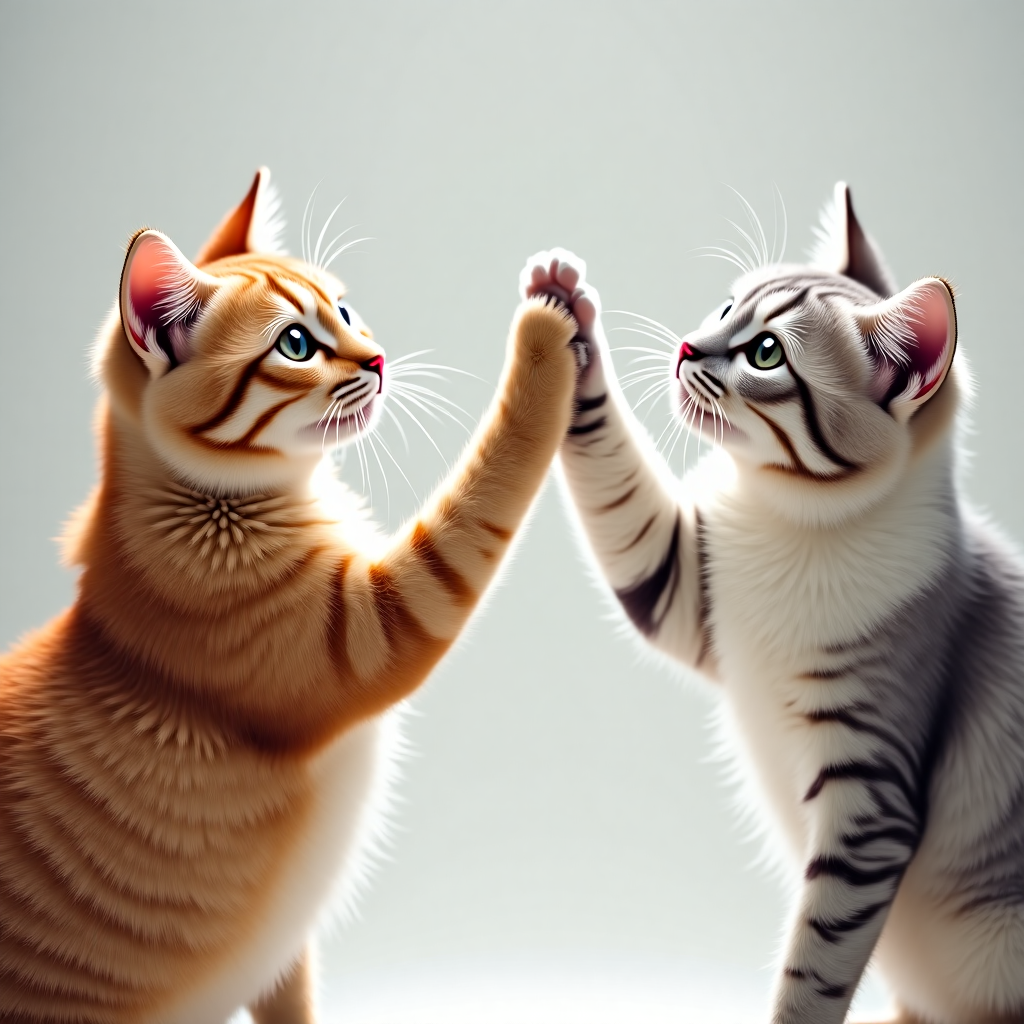
Teaching Your Cat to High Five: Unleash the Paw-some Potential!
Forget the stereotype of the aloof, untrainable feline. Cats are incredibly intelligent creatures, capable of learning complex behaviors and tricks – yes, including giving you a high five! This isn’t just a party trick; teaching your cat to high five strengthens your bond, provides essential mental stimulation, and can even make routine activities like nail trims easier. With patience, the right approach, and understanding your cat’s unique personality, you can transform your furry companion into a high-fiving superstar. Let’s dive into the rewarding world of cat training.
Why Train Your Cat? Beyond the Cute Factor
Training a cat might seem like a novelty, but the benefits extend far beyond impressing your friends. Cats are natural problem-solvers and hunters; in a domestic environment, they often lack sufficient outlets for these instincts. Training provides crucial mental enrichment, combating boredom and potential behavioral issues like destructive scratching or excessive meowing. It also builds confidence, especially in shy cats, as they successfully master new skills. Most importantly, training sessions are powerful bonding experiences. They rely on positive reinforcement, creating positive associations between you and your cat. Every successful high five reinforces trust and affection.
Contrary to popular belief, cats are highly trainable. They respond exceptionally well to positive reinforcement, which means rewarding desired behaviors immediately. Punishment or negative methods are ineffective and damaging to your relationship. Cats learn through association and consequence. If performing a specific action consistently leads to something wonderful (like a tasty treat or enthusiastic praise), they are motivated to repeat it. Understanding this principle is key to unlocking your cat’s potential.
Understanding the Feline Learner: Patience is Key
Before embarking on your high-five journey, it’s vital to set realistic expectations and understand your cat’s perspective. Unlike dogs bred for cooperation, cats are more independent. Their cooperation is earned, not demanded. Training requires immense patience. Sessions should be short (5-10 minutes max), frequent (multiple times a day if possible), and always end on a positive note. Watch your cat’s body language closely. Signs of stress or disinterest (like flattened ears, twitching tail, looking away, or walking off) mean it’s time to stop immediately. Pushing a reluctant cat will only create negative associations.
Every cat is an individual. Some are naturally curious and food-motivated, picking up tricks quickly. Others might be more cautious or less interested in treats. Tailor your approach accordingly. If your cat isn’t treat-driven, experiment with other rewards:
- Favorite treats: Small, soft, smelly treats are best (e.g., freeze-dried chicken, tuna flakes, commercial training treats).
- Playtime: A short burst with a favorite wand toy or laser pointer (ensure you let them “catch” it eventually!).
- Affection: Verbal praise (“Good kitty!” in a happy tone) combined with gentle chin scratches or head rubs.
Identify what makes your cat’s eyes light up – that’s your ticket to success.
Preparation: Setting the Stage for Success
Just like any good performance, preparation is crucial for successful training. Choose a quiet, familiar environment with minimal distractions – a calm room where your cat feels safe. Timing is everything. Pick a moment when your cat is naturally alert and receptive, perhaps after a nap or before a regular meal when they’re slightly hungry (but not starving). Avoid times when they’re sleepy, hyperactive, or focused on something else.
Gather your tools:
- High-value treats: Have these ready in an easily accessible container.
- Clicker (Optional but Recommended): A clicker is a small device that makes a distinct “click” sound. It acts as a precise marker, telling the cat *exactly* the moment they perform the desired behavior, bridging the gap until the treat arrives. If not using a clicker, use a consistent verbal marker like “Yes!” or “Good!”.
- Patience and a Positive Attitude: Your most important tools!
Introduce the clicker if you’re using one by “charging” it. Click, then immediately give a treat. Repeat several times until your cat associates the click sound with getting a reward. They don’t have to do anything for this step – just click -> treat.
The Step-by-Step Guide to Feline High Fives
Teaching a high five involves breaking the behavior down into small, manageable steps using a technique called “shaping.” We’ll reward approximations of the final behavior, gradually guiding your cat towards the full high five.
Phase 1: Targeting the Hand
The foundation of the high five is teaching your cat to touch your hand with their paw. Start by presenting your open palm near your cat, slightly off to the side at about their shoulder height. Be patient and wait. Cats are naturally curious; they might sniff or look at your hand.
The moment your cat moves a paw *towards* your hand (even just a tiny lift), click (or say your marker word) and immediately give a treat. Don’t worry if they don’t touch it yet; reward any movement indicating interest in your hand with their paw. Repeat this step until your cat consistently moves their paw towards your palm when you present it.
Phase 2: Making Contact
Now, raise your criteria slightly. Only click and treat when your cat’s paw actually makes contact with your palm. Present your hand as before. When their paw touches your skin, even briefly or accidentally, mark the behavior (click/”Yes!”) and reward enthusiastically! Consistency is key. If they bat at your hand playfully, that’s perfect! Reward that contact.
Practice this step until touching your palm becomes deliberate and consistent. You can gently wiggle your fingers or move your hand slightly to make it seem more like a playful target. Keep sessions short and fun.
Phase 3: Shaping the “High Five” Motion
Once your cat reliably touches your palm, it’s time to refine the gesture into a more distinct high five. Start positioning your palm slightly higher and more vertically, rather than flat or palm-up. The goal is to encourage them to reach upwards to touch it.
Only reward touches where the paw makes contact while your hand is in this more vertical position. You might need to start with your hand at the previous height and gradually inch it upwards over multiple sessions as they succeed. Reward the clearest attempts at an upward paw movement towards your vertical palm.
Phase 4: Adding the Cue and Refining
Once your cat is consistently performing the high-five motion (reaching up to touch your vertical palm), you can add a verbal cue. Choose a simple word like “High Five!” or “Paw!”. Say the cue clearly *just before* you present your hand and they perform the behavior. Then, when they high five, mark (click/”Yes!”) and reward.
Over time, your cat will associate the cue with the action. Practice the cue in different contexts and locations (once the behavior is solid in the original training spot) to generalize the behavior. Continue to reward successes, but you can gradually move towards an intermittent reinforcement schedule (rewarding every 2nd or 3rd success) to make the behavior more persistent. Always keep some rewards coming to maintain the fun!
Troubleshooting Common Hurdles
Encountering challenges is normal! Here’s how to address some common issues:
- My cat uses their nose instead of their paw: Be patient. Wait silently with your hand presented. Only mark and reward when the *paw* moves or touches. If they persistently sniff, try holding the treat in your other hand behind your back or lowering your target hand slightly.
- My cat bites or scratches my hand: This often happens if the cat gets overexcited or interprets the hand as a toy. Keep training sessions very short. Use high-value treats delivered quickly *after* the click/marker to redirect focus. Ensure your hand presentation is calm and non-threatening. If biting persists, stop the session and try again later with lower energy. Consider if your cat needs more playtime *before* training to burn off energy.
- My cat seems uninterested or walks away: Respect this! Forcing engagement is counterproductive. Evaluate your setup: Are distractions too high? Is the treat high-value enough? Is your cat tired or stressed? Try again later, perhaps with a different reward (like play). Make sure the training environment is truly calm.
- Progress is slow: This is perfectly okay. Some cats learn quickly; others need weeks or months. Break the steps down even smaller. Celebrate tiny improvements. Ensure you’re being consistent with your marker and immediate reward. Keep sessions brief and positive. Patience is non-negotiable.
Beyond the High Five: A World of Possibilities
Successfully teaching your cat to high five opens a door to a world of potential tricks and useful behaviors. The principles remain the same: positive reinforcement, patience, breaking behaviors into small steps, and understanding your cat. Once they grasp the concept of learning through interaction, you can teach them:
- Sit
- Come when called
- Jump through a hoop
- Go to a mat or carrier on cue
- Spin
- Touch a target stick (useful for guiding them)
Training can also be applied to cooperative care. Using target training, you can teach your cat to voluntarily enter a carrier, hop onto a grooming table, or even present a paw for nail trims, reducing stress for both of you.
The True Reward: A Stronger Bond
Teaching your cat to high five is about much more than a cute trick. It’s a journey of communication, patience, and mutual understanding. It demonstrates that you respect your cat’s intelligence and individuality. The process builds immense trust. Every click, every treat, every successful high five reinforces the positive connection between you.
Celebrate the small victories along the way. If your cat even looks at your hand curiously, that’s a win! Progress might be incremental, but the shared experience is invaluable. The sight of your feline friend confidently offering a paw for a high five is a testament to your dedication and the unique bond you share. It’s a joyful reminder that with love, patience, and the right approach, you can unlock incredible potential in your beloved companion. So grab some treats, find a quiet spot, and start your high-fiving adventure today!